India's Early Post-Independence Wars Without Nehru as Prime Minister
By early 1947, the British Empire had accepted that its rule in India was coming to an end. The impact of the Second World War, growing political pressure, and weakening colonial control accelerated the process of transfer of power. While people looked forward to independence, rising communal tensions and the final negotiations over partition created widespread uncertainty. Freedom inspired hope, but it also placed huge responsibilities on the future leaders of the nation.
The new government faced several urgent challenges. The armed forces had to be divided between India and Pakistan, government departments required reorganization, and over 500 princely states still needed integration. Massive population movements across the new borders threatened humanitarian and security crises, while wartime inflation and political instability weakened the economy. Independent India had little time to celebrate before addressing these critical issues.
As independence drew closer, focus shifted to the leadership of the Indian National Congress, which had led the freedom movement for decades. The leader chosen at this crucial stage was expected to head the government of independent India and guide the nation through its early years. The Congress had many respected leaders with different strengths and visions for the country's future.
Jawaharlal Nehru was recognized as a skilled statesman with international standing and a vision of a modern democratic republic based on scientific progress and industrial development. Alongside him, Sardar Vallabhbhai Patel was known for his organizational discipline, administrative efficiency, and strong commitment to national unity. His leadership during the Bardoli Satyagraha and effective management of party affairs earned him widespread respect across the political spectrum.
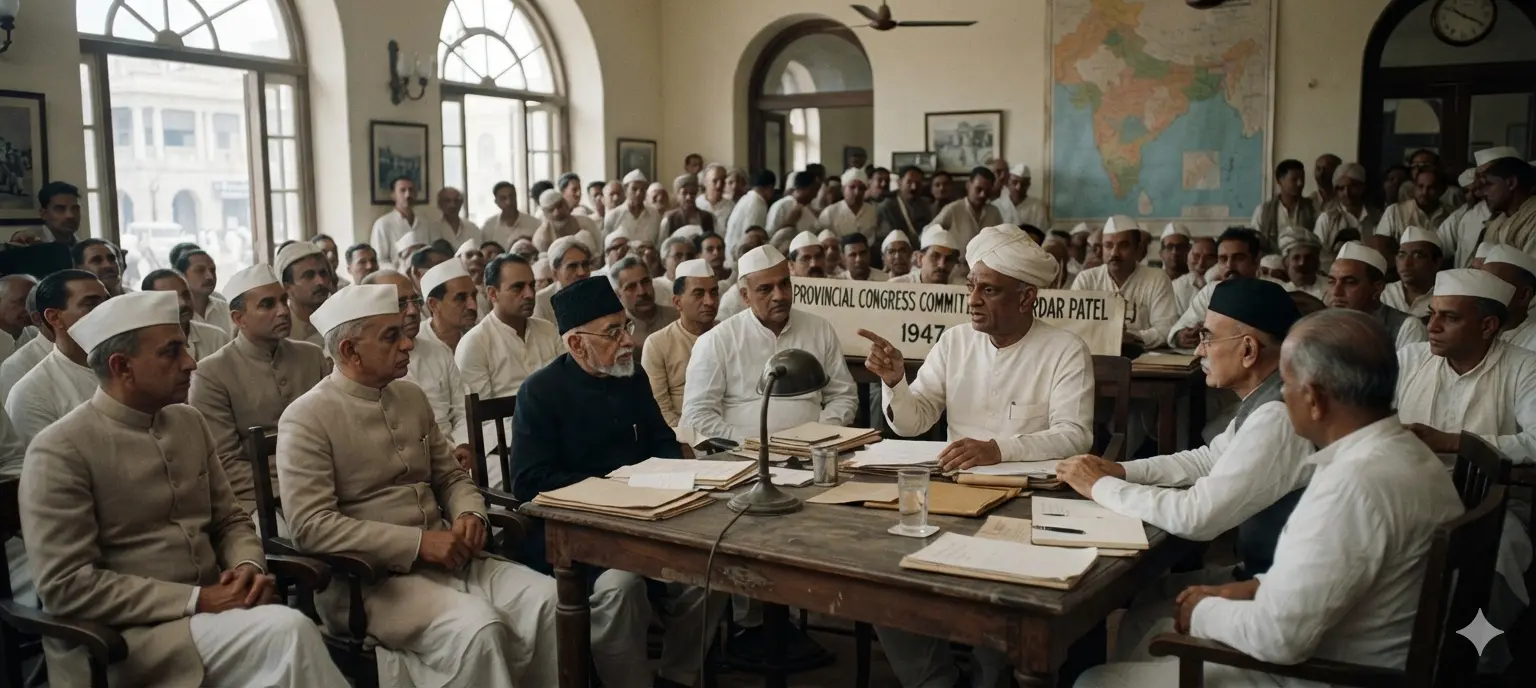
During the discussions on Congress leadership before the transfer of power, the views of the Provincial Congress Committees became a key measure of support. Across the country, many senior party workers and regional leaders backed Sardar Vallabhbhai Patel, believing his practical approach and firm decision-making were vital for handling communal violence, refugee rehabilitation, constitutional transition, and the integration of princely states. Many Congress leaders felt that maintaining internal order, protecting territorial unity, and building an effective administration were the nation's most urgent priorities.
Patel's record convinced many that he possessed the leadership needed for these challenges. When the Provincial Congress Committee nominations were compiled, it became clear that he enjoyed broad organizational support. In political circles across New Delhi and the provinces, Patel was widely seen as the leading candidate to guide India into independence, with many expecting the final decision to reflect this strong backing.
As strong support from the Provincial Congress Committees became clear, Sardar Vallabhbhai Patel emerged as the leading choice to guide the Congress during the transfer of power. However, Mahatma Gandhi believed Jawaharlal Nehru should lead independent India and privately urged Patel to withdraw. Patel, known for his loyalty to Gandhi, faced a difficult decision because he also felt responsible for honoring the confidence shown in him by the party organization. After careful reflection, he consulted several senior Congress leaders, including Dr. Rajendra Prasad, C. Rajagopalachari, Govind Ballabh Pant, and Acharya J. B. Kripalani, who argued that Patel's administrative ability, firm leadership, and broad support made him the best choice for the challenges of partition, refugee rehabilitation, national unity, and governance.
These discussions strengthened Patel's resolve to respect the party's mandate. When Gandhi again requested that he step aside, Patel respectfully declined, stating that he could not ignore the overwhelming support of the Congress organization. The issue was eventually decided within the Congress leadership, where most delegates and senior members backed Patel. With decisive support from the Provincial Congress Committees, Sardar Vallabhbhai Patel was elected President of the Indian National Congress, placing him in line to lead the government as India approached independence.
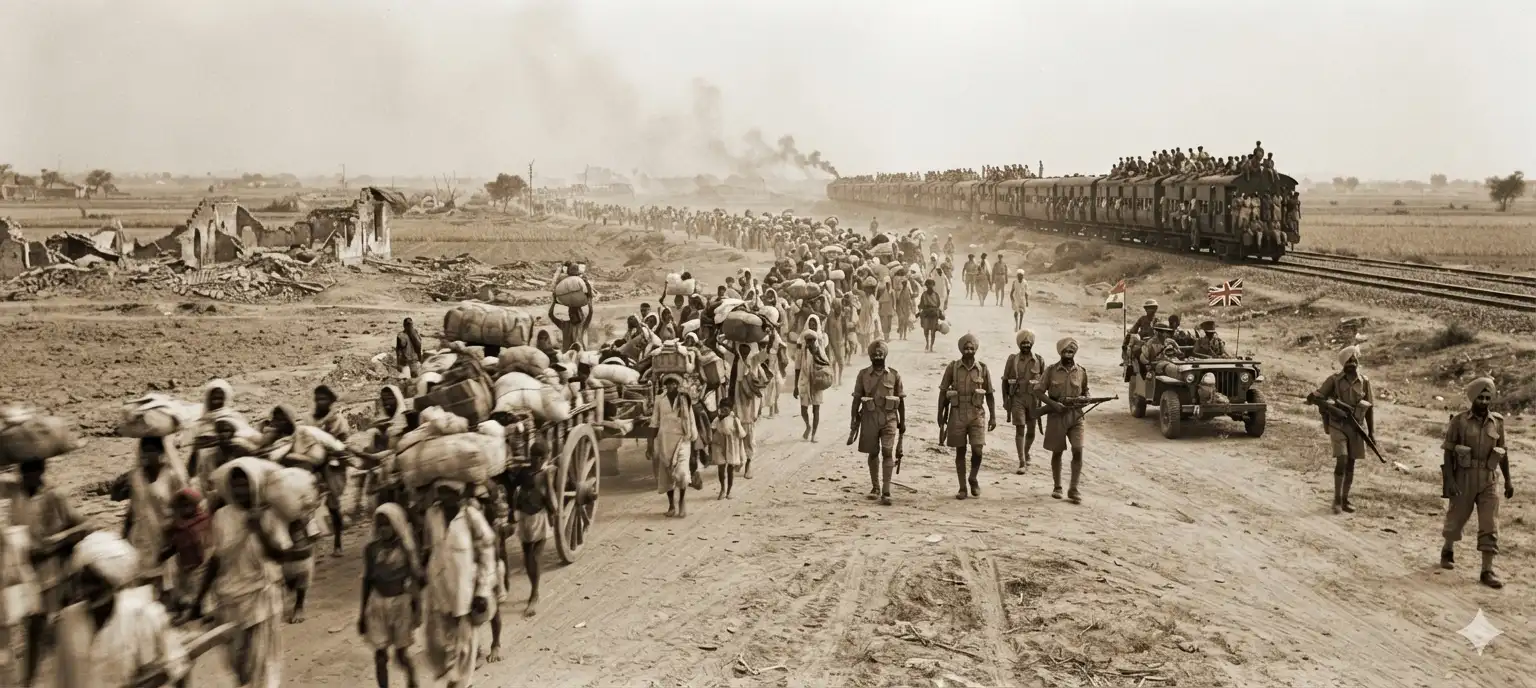
On 15 August 1947, India became independent, but the joy of freedom was overshadowed by the violence and mass displacement caused by Partition. Millions of Hindus, Muslims, and Sikhs crossed the new borders, while communal riots spread across Punjab, Bengal, Delhi, and nearby regions. Villages were deserted, refugee caravans stretched for miles, and many trains became sites of terrible violence. To restore order, the government strengthened the civil administration, sent soldiers to restore order, imposed curfews, and provided armed escorts for refugee convoys. District officials received emergency powers to control riots, seize illegal weapons, and arrest those spreading communal violence regardless of religion.
Refugee camps were established at major transit points, and coordination between provincial governments improved the sharing of intelligence and security responses. Although the scale of Partition made complete control impossible, these measures helped prevent an even greater breakdown of law and order. By the end of 1947, violence had gradually declined, refugee movements became more organized, and stability slowly returned to much of northern India. The government then shifted its focus to integrating the princely states and securing India's borders.
Despite differences over the selection of India's first Prime Minister, Sardar Vallabhbhai Patel believed that unity within the Congress leadership was vital for the new nation. Recognizing Jawaharlal Nehru's intellect, popularity, and commitment to India's future, Patel invited him to join the Union Cabinet as Minister for Education and Scientific Development. In this role, Nehru was responsible for expanding schools and universities, promoting scientific research, encouraging technical education, and strengthening the country's educational and industrial foundations. However, key areas such as defense, internal security, foreign affairs, and major economic decisions remained under the Prime Minister and the senior Cabinet leadership.
Nehru accepted the position, believing that an educated and scientifically advanced society was essential for building a strong republic. Although his role in strategic and military affairs was limited, he became a leading advocate for higher education, scientific institutions, and technological progress during the early years of independent India.
After the immediate challenges of Partition began to ease, the Government of India focused on Hyderabad, the largest princely state yet to decide its future. To avoid rising tensions, India and the Nizam signed a Standstill Agreement, maintaining existing administrative arrangements while negotiations continued. Trade, communications, postal services, and transport links remained uninterrupted as both sides sought a peaceful solution. Prime Minister Vallabhbhai Patel viewed the agreement as an opportunity for negotiation rather than a permanent settlement. He opened direct talks with the Nizam, assuring him that joining India would not diminish his dignity or historic status. Patel also offered generous concessions, including retention of the Nizam's ceremonial title, a privy purse, continued residence in his palaces, and gradual integration of Hyderabad's administration into the Indian system.
Patel further promised that Hyderabad's history and traditions would be respected and that the central government would support its development. These assurances aimed to present accession as a partnership rather than a surrender. Despite these offers, the Nizam remained reluctant, encouraged by advisers who believed Hyderabad could remain independent. As a result, negotiations continued while the situation within the state grew increasingly uncertain.
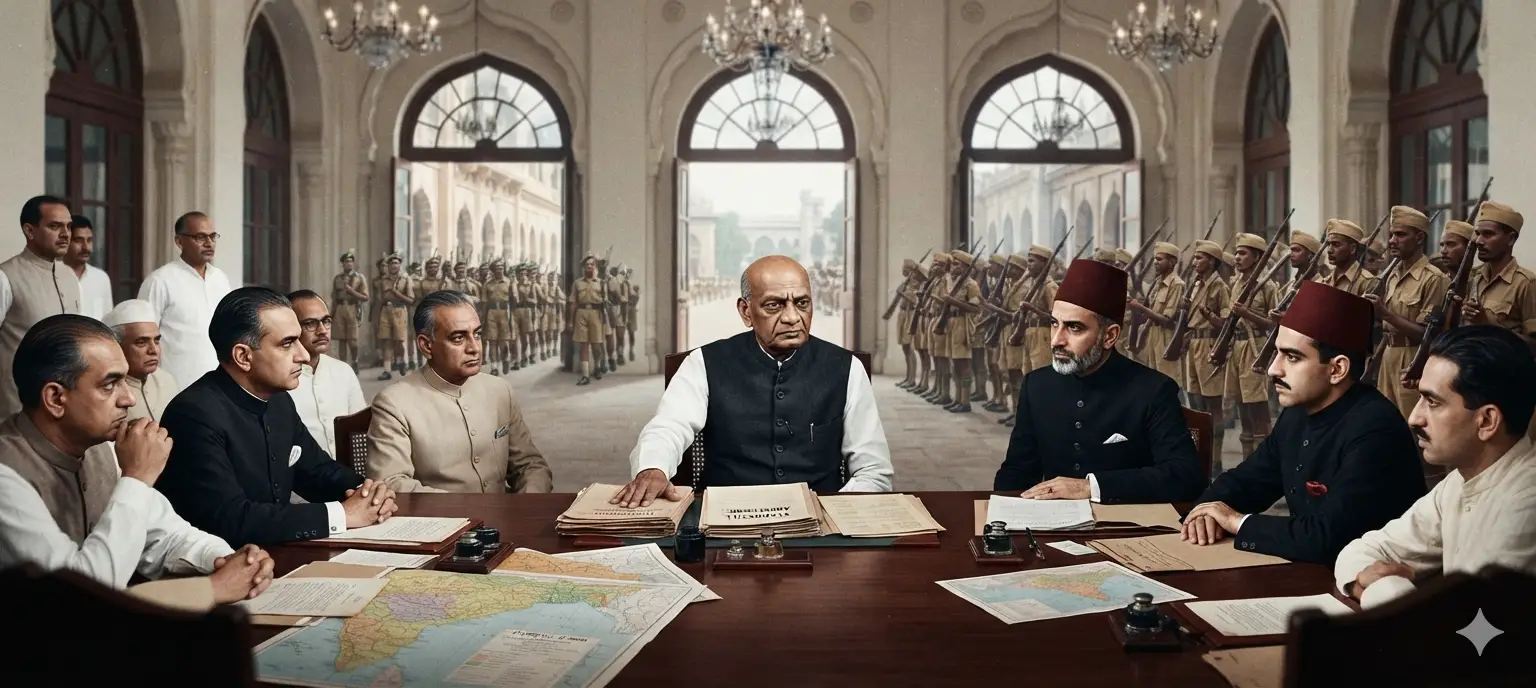
Although the Nizam understood that joining India was the safest option, he delayed a final decision because his court was divided between moderates and hard-line advisers. Among the most influential was Qasim Razvi, leader of the Razakars, who believed Hyderabad could remain independent and even encouraged closer ties with Pakistan. As Razvi's influence grew, Hyderabad slowed accession talks, attempted to obtain arms from abroad, maintained political and financial contacts with Pakistan, and allowed the Razakars to expand into a powerful armed force. Reports of Razakar training camps and preparations for resistance increased India's concerns and were seen as violations of the Standstill Agreement.
Prime Minister Vallabhbhai Patel concluded that Hyderabad was using the agreement to strengthen its position instead of seeking a peaceful settlement. He warned Hyderabad's representatives that India would not tolerate actions threatening national security and assured the Nizam that the earlier decision for accession remained available. At the same time, Patel made it clear that continued violations, military preparations, or attempts to seek outside support would force the Government of India to take decisive action. Although negotiations continued, relations had reached a turning point where both diplomacy and military preparedness shaped Hyderabad's future.
In the months after the Standstill Agreement, the situation in Hyderabad became increasingly serious. Public demonstrations demanding a peaceful settlement and clarity on accession were often met with violence by the Razakars. Many villagers were arrested, beaten, or dispersed, raising concerns that the Hyderabad government was unwilling or unable to control the armed militia. Prime Minister Vallabhbhai Patel believed that delaying action would only allow extremist groups to grow stronger. During an emergency Cabinet meeting, some ministers urged caution, fearing military intervention could trigger wider regional tensions or invite a response from Pakistan. Patel, however, argued that India's sovereignty and internal security could not be compromised by the threat of external reactions.
Confident in the strength of the Indian Armed Forces, Patel ordered detailed military planning while keeping diplomatic channels with Hyderabad open until the last moment. The government made it clear that continued instability and Razakar activities would no longer be tolerated. These preparations marked the beginning of a campaign aimed at securing Hyderabad's accession and demonstrating the Union government's commitment to protecting India's unity and security.
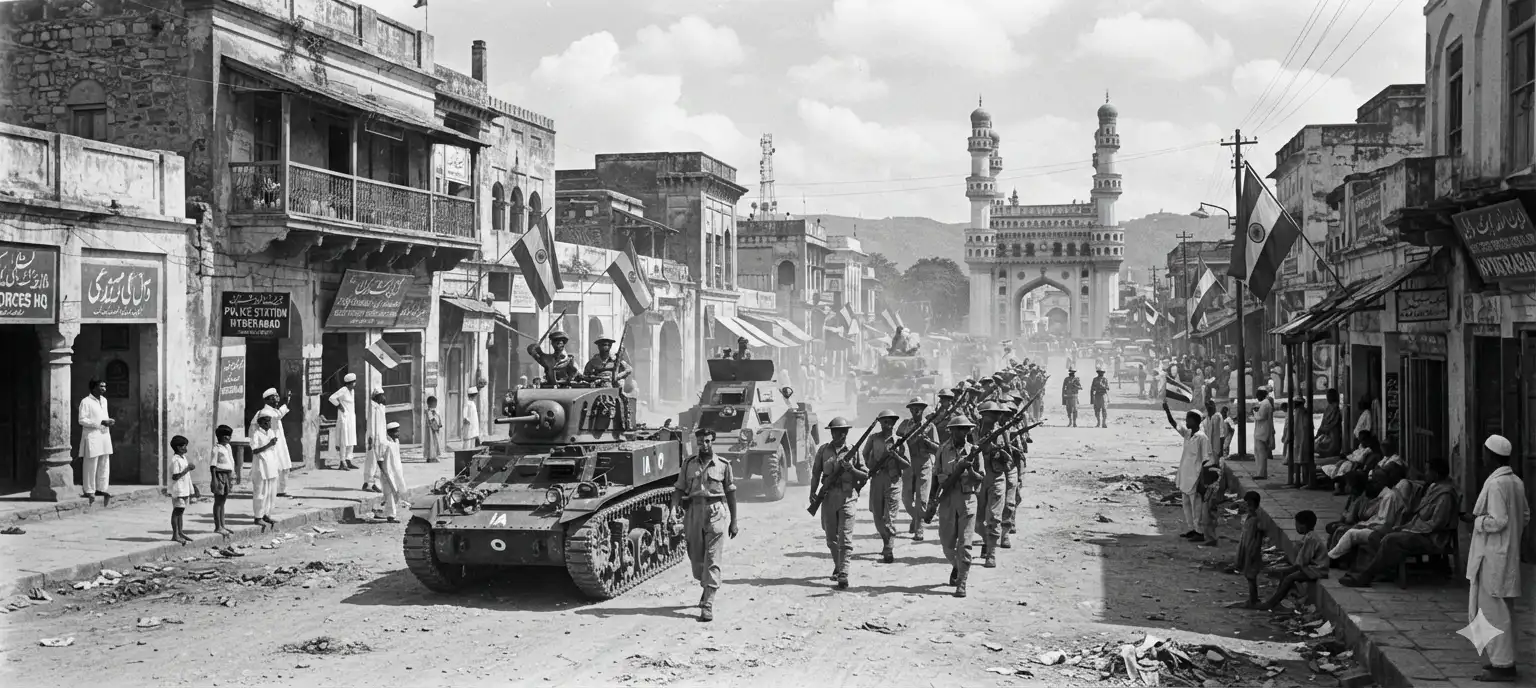
After diplomatic negotiations failed and the Razakars continued to gain influence, the Government of India launched Operation Polo in September 1948 to integrate Hyderabad into the Indian Union. The objective was to defeat the Hyderabad State Forces and disband the Razakar militia before prolonged resistance could occur. Indian Army forces entered Hyderabad from multiple directions using coordinated infantry, armored units, artillery, and air support. Although Hyderabad had trained soldiers and modern equipment, its forces were unable to match India's organization, numbers, and military strategy. The Razakars, despite their large volunteer base, lacked the discipline and training needed to resist a conventional offensive.
The operation lasted only a few days, with Indian forces quickly capturing key towns, communication routes, and strategic locations. As resistance weakened, the Nizam ordered his forces to stop fighting to prevent further bloodshed. Operation Polo ended with Hyderabad's accession to India, the disbanding of the Razakar organization, and the arrest or disappearance of its leaders. The campaign became a major step in the political and territorial integration of independent India.
After Operation Polo, the Government of India focused on maintaining law and order in Hyderabad and preventing communal retaliation. Prime Minister Vallabhbhai Patel instructed the Army and civil administration to protect civilians, disarm combatants, secure towns and villages, and prevent revenge attacks against any community. Curfews were imposed in sensitive areas, mixed police and military patrols protected public places, and strict action was taken against looting, arson, and violence. Patel emphasized that ordinary citizens should not face collective punishment for the actions of the Razakars and directed officials to distinguish between militants and the general population.
Relief camps were established for displaced families, damaged infrastructure was repaired, and civil services were restored quickly. Public appeals and security measures helped rebuild confidence among communities and reduce fear. Although some isolated incidents occurred, they were contained effectively. In the following months, Hyderabad gradually returned to stability, with the government's efforts focused on justice, discipline, and equal protection for all citizens.
At the time of independence, Jammu and Kashmir held one of the most strategic positions in the Indian subcontinent. The princely state controlled key Himalayan mountain passes and major river systems that supported agriculture, transport, and communication. It bordered both India and Pakistan, while its northern frontiers lay close to Afghanistan and China, making it a vital buffer in South and Central Asian geopolitics. Its rugged terrain and high ground also provided strong natural defenses and significant military advantages, giving whoever controlled the region greater influence over regional security and important trade routes.
Maharaja Hari Singh initially chose to keep Jammu and Kashmir independent instead of joining either India or Pakistan. His government tried to maintain friendly relations with both dominions while delaying a final decision. However, the state's small and scattered armed forces were stretched across difficult terrain, making it difficult to defend the long borders against an external invasion or a coordinated internal rebellion.
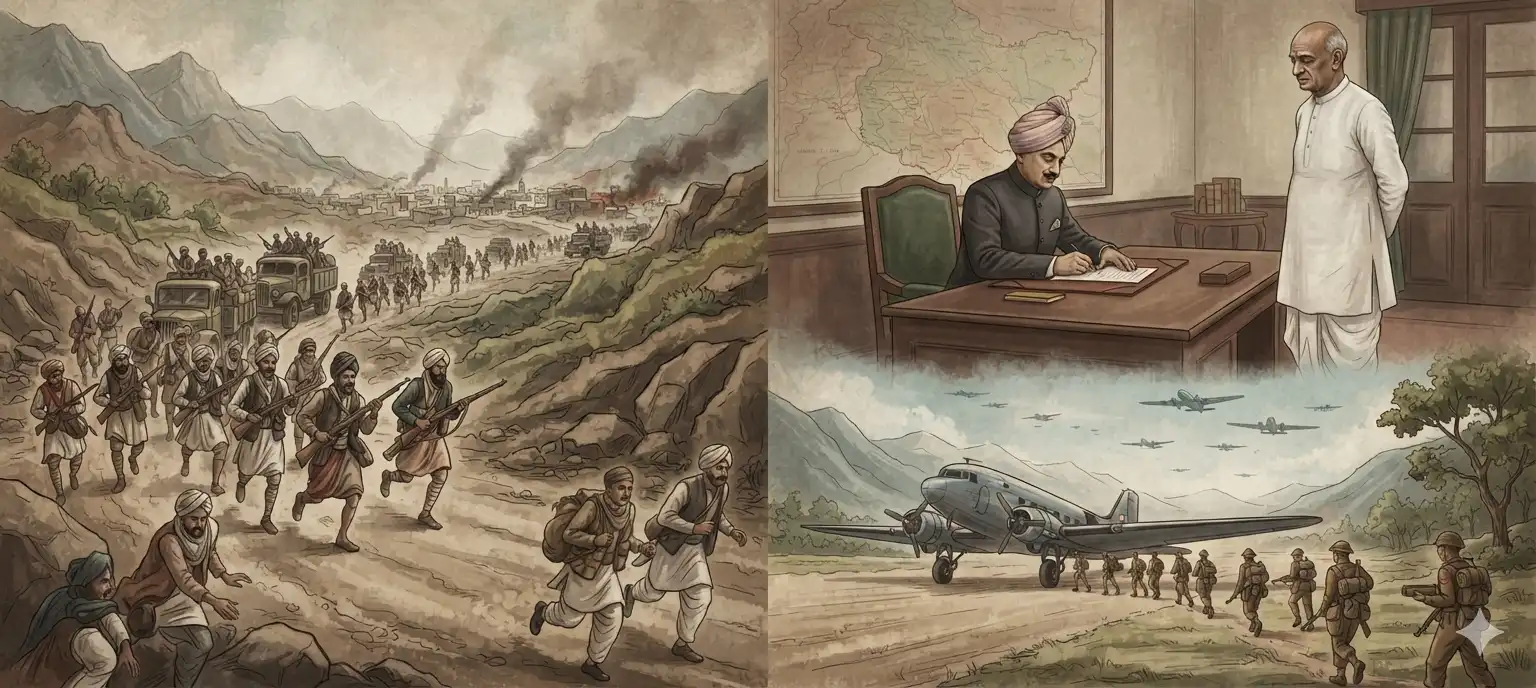
In October 1947, thousands of tribal fighters from the North-West Frontier, backed by elements from Pakistan, invaded Jammu and Kashmir to capture the state before it could formally join India. Advancing rapidly through key towns, they aimed to seize Srinagar and its airfield, believing control of the capital would decide the conflict. Their swift offensive spread panic across the state administration and forced Maharaja Hari Singh to urgently seek military assistance from India.
Unable to stop the invasion with his limited forces, Maharaja Hari Singh signed the Instrument of Accession, officially bringing Jammu and Kashmir into the Indian Union. After receiving the signed document, Prime Minister Vallabhbhai Patel approved immediate military intervention. The Indian Army launched an emergency airlift to Srinagar, securing the airfield just before it could fall to the invaders. This allowed continuous reinforcements, weapons, and supplies to reach the Valley, stabilizing the situation and marking the beginning of India's military campaign to defend Jammu and Kashmir.
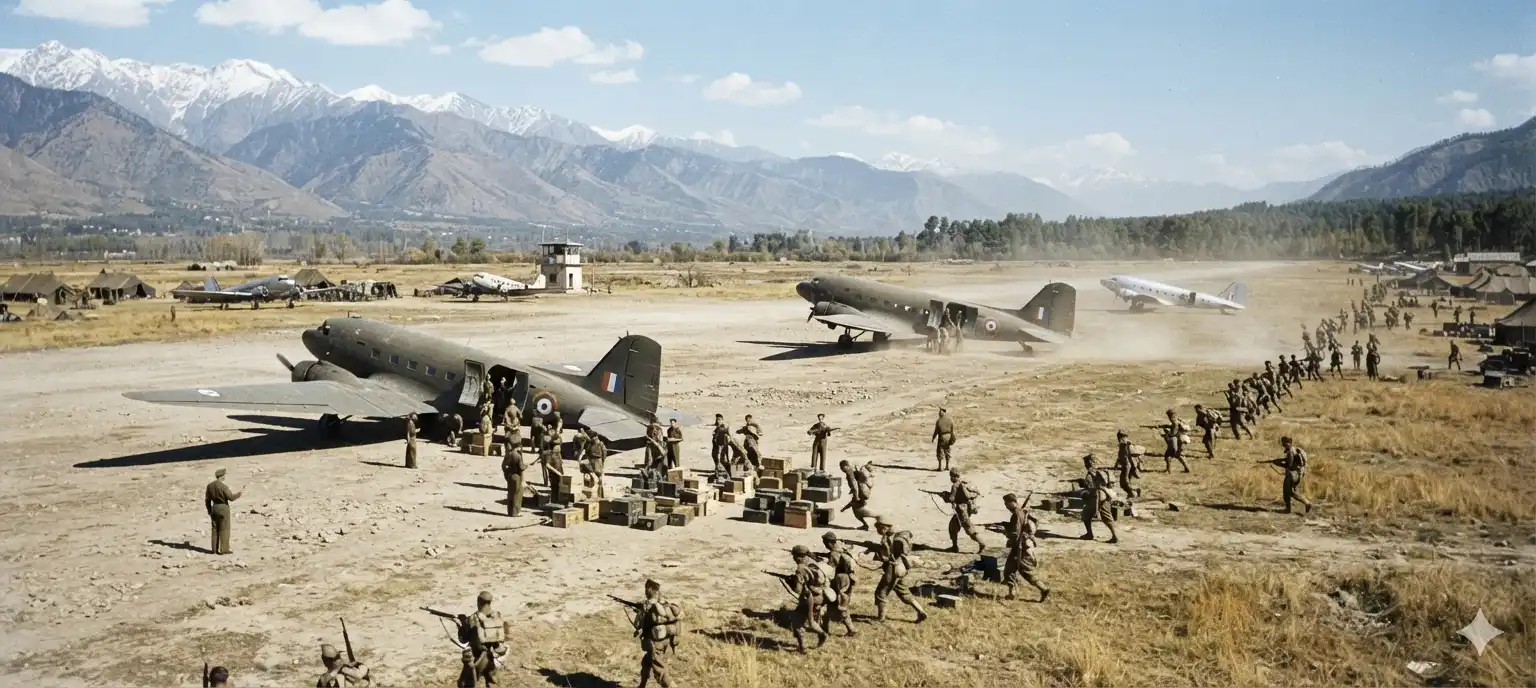
After Jammu and Kashmir formally acceded to India, Prime Minister Vallabhbhai Patel and the Army High Command realized that the state's defense depended on securing Srinagar and its airfield. Intelligence reports warned that tribal forces were advancing rapidly through Baramulla with the aim of capturing the capital before Indian troops could arrive. If the airfield fell, India would have to depend on slow and dangerous mountain routes, putting the entire Kashmir Valley at risk. In response, the Indian military launched one of the most urgent airlift operations in its history. Civilian and military transport aircraft were quickly assembled to carry infantry, ammunition, communication equipment, and essential supplies to Srinagar. Every flight was crucial, as the first troops had to defend the Valley until larger forces could be deployed.
The initial Indian detachments focused on securing the airfield rather than launching immediate attacks. Defensive positions were established around the runway, patrols guarded the perimeter, and engineers kept the airstrip operational for continuous landings. This secured a vital lifeline through which thousands of soldiers, artillery, vehicles, and supplies reached the Valley over the following days. Following a key principle of military logistics, the Indian command concentrated on protecting its aerial supply route instead of spreading its limited forces across a wide front. As reinforcements arrived, Indian troops moved westward to secure roads, bridges, and strategic positions while artillery covered likely enemy approaches. The successful defense of Srinagar airfield proved decisive, preventing the isolation of the Valley, ensuring uninterrupted logistical support, and providing the foundation for India's later counteroffensives. It demonstrated how control of a single strategic airhead could shape the outcome of an entire campaign.
The first Indian Army formations that landed at Srinagar entered a difficult battlefield with limited heavy equipment, incomplete intelligence, and an enemy that had already advanced deep into the Kashmir Valley. Instead of launching a hurried counterattack, Indian commanders focused on buying time, preserving their fighting strength, and preventing the invaders from capturing key positions until reinforcements could arrive. Their immediate priority was securing Srinagar and its airfield. Infantry units established layered defensive positions around the runway and the city's approaches, while reconnaissance patrols monitored enemy movements and identified likely routes of attack. Bridges, road junctions, and narrow mountain passes were occupied wherever possible, forcing the invaders to confront well-prepared defenses rather than advancing freely through the Valley.
A key part of the Indian strategy was making full use of the region's rugged terrain. Small detachments occupied areas overlooking major roads, allowing them to observe enemy movements and direct accurate rifle and machine-gun fire against advancing columns. This reduced the attackers' numerical advantage and forced them to move more cautiously across unfamiliar ground. At the same time, military engineers prepared defensive obstacles and kept vital infrastructure operational so that reinforcements and supplies could continue reaching the front. The Indian Air Force supported these efforts by carrying out reconnaissance missions and transporting ammunition, medical supplies, and personnel into the Valley. The uninterrupted operation of Srinagar airfield ensured a steady flow of fresh troops, preventing the defenders from being overwhelmed during the crucial opening phase of the campaign.
After sufficient reinforcements reached the Valley, the Indian Army shifted from emergency defense to systematically stabilizing the front. Instead of launching a large-scale offensive across the entire region, commanders concentrated on securing the Srinagar–Baramulla axis, the main route used by the invading forces. This protected Indian supply convoys while limiting the enemy's ability to reinforce or maneuver. Through a series of coordinated operations, Indian troops pushed hostile forces away from Srinagar and recaptured key positions along the road network. Artillery was brought forward to support infantry attacks, and improved communication between field headquarters and frontline units allowed faster responses to enemy movements and better use of reserve forces.
Logistics continued to play a decisive role throughout the campaign. Ammunition depots, fuel stores, and field hospitals were established near secure positions, enabling combat units to operate without major interruptions. By combining disciplined defensive tactics, strong logistics, and carefully planned offensive operations, the Indian Army turned a fragile situation into a stable front. The invaders gradually lost the initiative they had gained at the beginning of the campaign, while Indian forces secured the time and resources needed to prepare for larger operations to reclaim the remaining parts of the state.
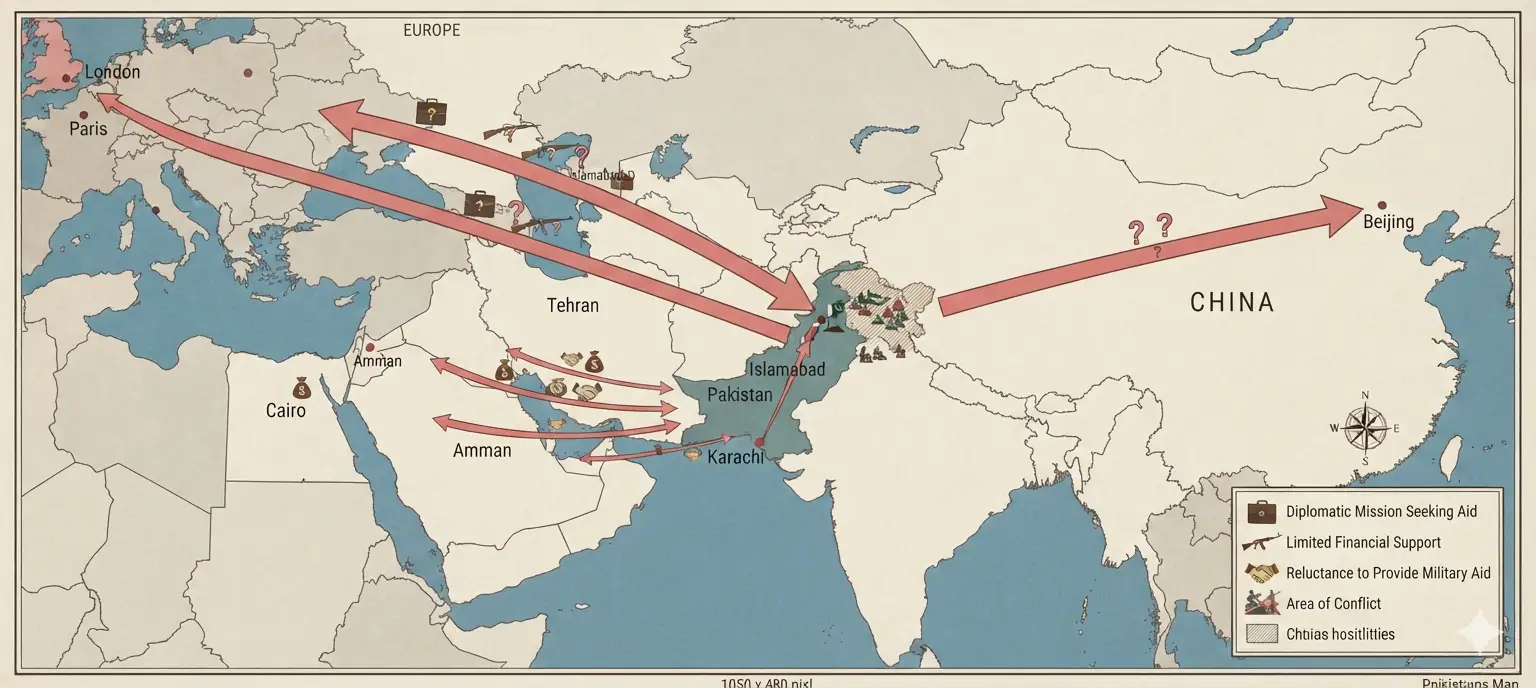
As the conflict in Jammu and Kashmir intensified and the suspension of the remaining financial settlement increased pressure on government resources, Pakistan sought help from friendly nations to strengthen its military and economic position. Diplomatic missions were sent to several Western capitals requesting emergency loans, defense equipment, and political support, arguing that the conflict threatened regional stability. However, most Western governments limited themselves to expressing concern and urging restraint. Reluctant to become directly involved so soon after Partition, they preferred negotiations over providing military aid or major financial assistance.
Pakistan also looked to China for support, but the Chinese government, occupied with its own domestic challenges and unwilling to become involved in the Kashmir dispute, declined to offer meaningful military or financial assistance. Among Islamic nations, countries such as Iran, Egypt, and Jordan showed political sympathy and provided limited financial help and diplomatic encouragement, but none supplied significant arms or military equipment due to their own constraints and reluctance to enter the conflict. Without substantial foreign assistance, Pakistan relied mainly on its existing resources. For Indian leaders, this reinforced Vallabhbhai Patel's belief that rapid military action and sustained diplomacy would prevent outside powers from changing the balance of the war, leaving the outcome to be decided primarily by the forces already fighting in Kashmir.
With Srinagar secured and the enemy advance halted, the Indian Army shifted from emergency defense to a series of coordinated clearing operations across multiple sectors of Jammu and Kashmir. The objective was no longer limited to protecting the Valley but also to eliminate hostile strongholds, reopen vital communication routes, and restore the authority of the state government in threatened areas. As the situation stabilized, Indian commanders planned operations to secure strategic regions, strengthen supply lines, and prevent the enemy from regrouping for further offensives.
In the Jammu sector, Indian forces focused on clearing the region of tribal fighters who were attempting to disrupt supply routes and isolate military garrisons. Infantry battalions carried out aggressive patrols, securing villages, road junctions, and other important positions while military engineers repaired damaged bridges and culverts. Restoring these communication links allowed reinforcements, ammunition, and supplies to move north without major interruptions, strengthening India's logistical network and denying the enemy opportunities to cut off or isolate Indian forces operating across the region.
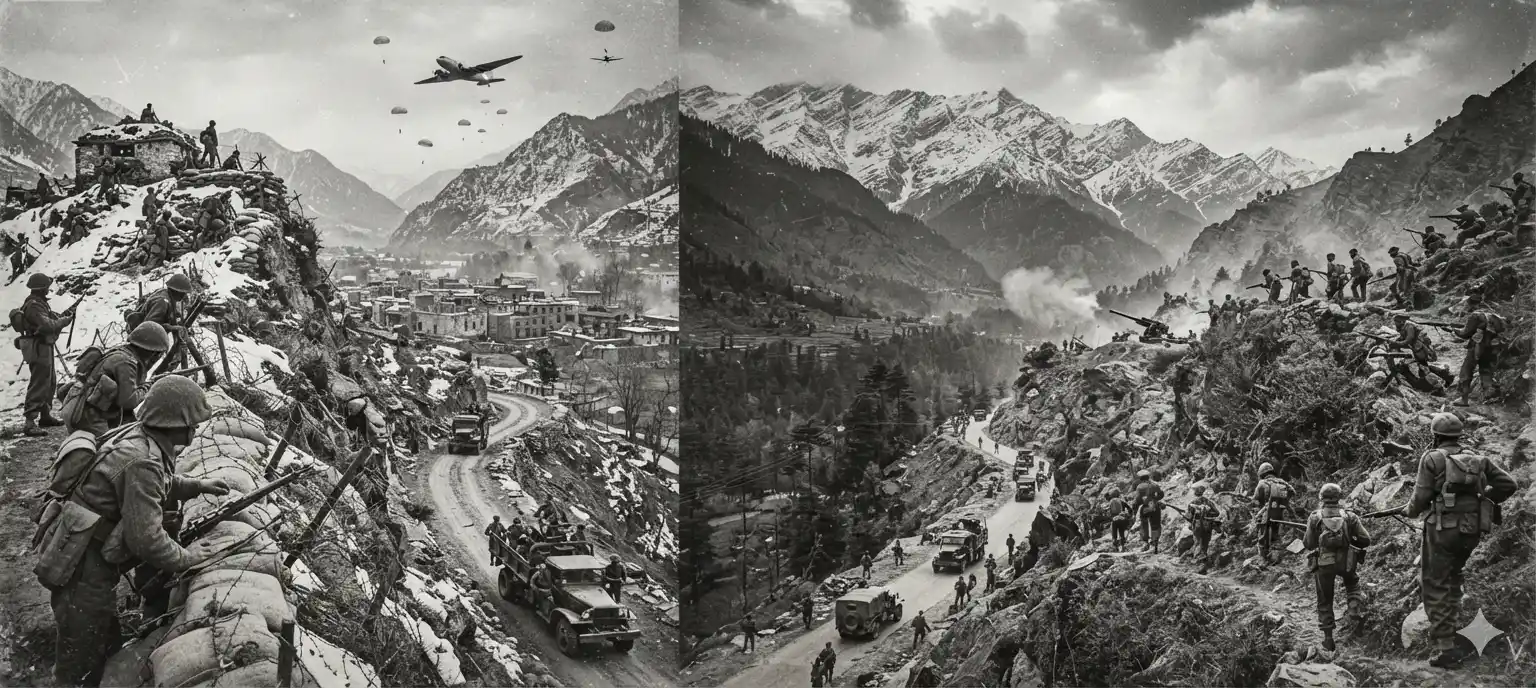
The Poonch region posed a unique challenge because its rugged mountains and limited road network made large-scale military maneuvers extremely difficult. Both sides were forced to depend on isolated strongpoints and narrow supply routes to sustain their forces. To counter these conditions, Indian troops adopted a defensive strategy centered on holding fortified positions while maintaining a steady flow of ammunition, food, and other supplies through air transport and escorted convoys. Frequent local counterattacks disrupted enemy attempts to tighten their encirclement, allowing the garrison to remain operational and continue resisting despite constant pressure from hostile forces.
After recapturing Baramulla and Uri, Indian commanders launched systematic clearing operations across the surrounding countryside to eliminate the remaining enemy resistance. Instead of advancing in a single column, Indian forces moved simultaneously along the valley floor and the adjoining high ground, preventing hostile groups from slipping behind the front or escaping through the hills. Patrols searched forests, villages, and mountain trails for enemy positions, while artillery was deployed to support infantry assaults against fortified locations overlooking the main road. These coordinated operations strengthened Indian control over the corridor and secured one of the Valley's most important lines of communication.
By the end of these operations, the Indian Army had regained firm control over Srinagar, Jammu, Baramulla, Uri, Poonch and the major communication routes linking them. The invading tribal forces were pushed back from much of the Kashmir Valley and forced onto the defensive in the western sectors. Indian forces successfully stabilized the battlefield, secured the territories that correspond to the present-day Indian-administered regions of Jammu and Kashmir, and established a continuous defensive line facing the areas that remained outside their control. Although the immediate objectives had been achieved, large territories to the west and northwest, including what later became known as Pakistan-occupied Kashmir, were still under hostile control.
After recapturing Uri, Indian commanders decided to maintain their momentum by advancing westward along the Jhelum Valley Road toward Chakothi, a strategically important settlement controlling the approach to Muzaffarabad. A battalion, designated here as Army A, was assigned to lead the assault. Intelligence indicated that the area was defended mainly by tribal irregulars supported by elements of the Pakistani military, and planners believed a rapid advance could prevent the enemy from organizing strong defenses. However, as Army A moved through the narrow mountain corridor beyond Uri, it encountered increasingly difficult terrain. Steep slopes and dense forests overlooked the only road of advance, and Pakistani forces had already fortified these commanding heights with machine-gun positions, mortars, and artillery observation posts, preparing to resist the Indian advance.
As the leading Indian companies approached Chakothi, they came under a heavy and well-coordinated barrage from Pakistani defenders positioned on the surrounding heights. Machine-gun fire swept the narrow road while mortars and artillery struck troop concentrations and supply vehicles with accuracy. From their elevated positions, the defenders could observe nearly every movement in the valley, making it extremely difficult for Indian troops to remain concealed or maneuver safely. The rugged terrain further increased the defenders' advantage, turning the approach into a deadly battlefield.
Indian soldiers made repeated attempts to capture the surrounding slopes and continue their advance, but exposed approaches, steep cliffs, and strongly fortified enemy positions resulted in growing casualties. Communications became increasingly difficult as units were pinned down under constant fire, while logistical vehicles struggled to move through the narrow route without becoming easy targets. Realizing that continuing the assault would risk destroying the battalion without achieving its objective, field commanders ordered Army A to carry out a disciplined withdrawal. The troops successfully fell back to prepared positions around Uri, preserving their fighting strength while acknowledging that Chakothi could not be captured through a direct frontal attack under the existing conditions.
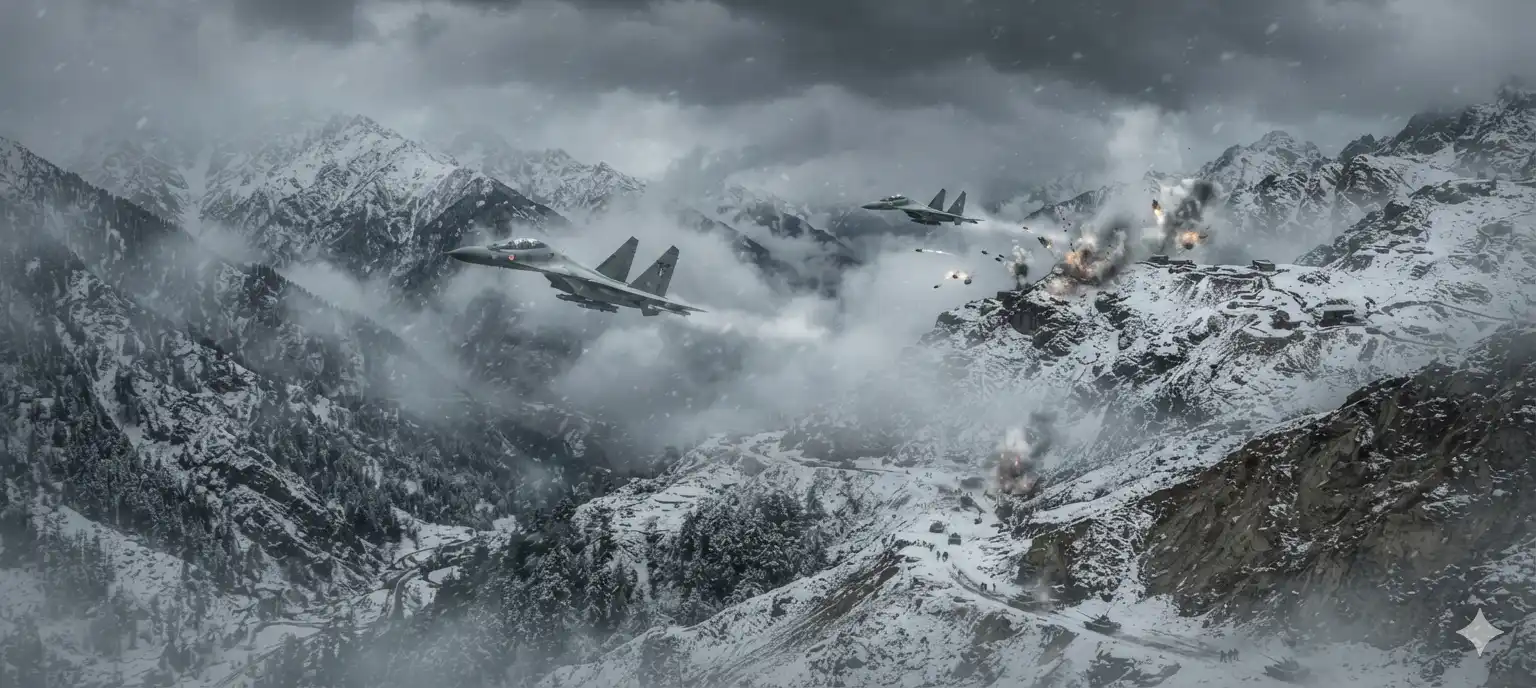
To break the deadlock at Chakothi, Indian military headquarters called upon the Indian Air Force to support the ground offensive. The objective was to bomb Pakistani defensive positions on the surrounding mountains, destroy fortified bunkers, and weaken enemy resistance before launching another assault. However, the mission soon faced serious natural challenges. Winter weather covered the region with dense clouds, thick fog, and intermittent snowfall, greatly reducing visibility and making accurate target identification extremely difficult. Pakistani positions were carefully concealed among rocky outcrops, forests, caves, trenches, and camouflaged ridgelines, making them even harder to locate from the air.
Despite these obstacles, the Indian Air Force carried out repeated bombing operations against the enemy positions. The difficult weather, combined with the rugged high-altitude terrain, significantly reduced bombing accuracy. Many bombs landed on empty mountain slopes or caused only limited damage to the well-protected Pakistani fortifications. Strong winds, poor visibility, and the challenging flying conditions also affected aircraft performance and weapons delivery, preventing the air strikes from inflicting the decisive damage needed to clear the way for a successful ground advance.
By the end of the fighting, neither the Indian ground assault nor the Indian Air Force's bombardment had succeeded in forcing the Pakistani defenders from their commanding positions overlooking Chakothi. Although the Indian Army maintained firm control of Uri and its vital supply lines, it was compelled to halt further westward advances and reassess its operational strategy. The failure to capture Chakothi showed that the difficult terrain, harsh winter conditions, and well-prepared enemy defenses had significantly reduced the effectiveness of both ground and air operations, bringing the advance to a temporary standstill.
For the Pakistani defenders, the successful defense highlighted the advantages of occupying fortified positions on dominating high ground. For the Indian Army, the setback demonstrated that numerical strength and battlefield momentum alone were not enough to overcome entrenched defenses in mountainous terrain. Both sides recognized that any future attempt to capture Chakothi would require far more detailed planning, including better reconnaissance, engineering support, concentrated artillery fire, and closely coordinated infantry operations instead of relying on a direct frontal assault.
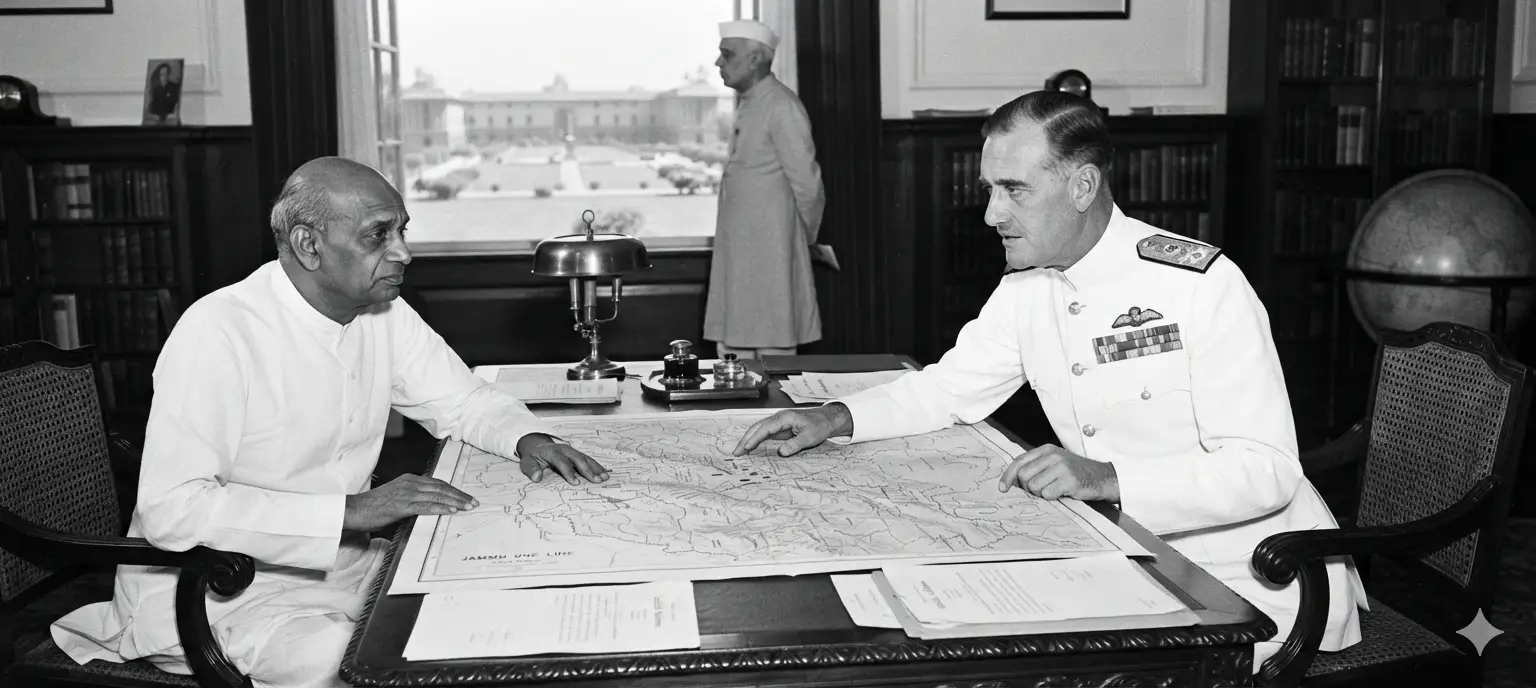
The failed assault on Chakothi and the resulting military stalemate sparked fresh debate within India's political and military leadership. Concerned that prolonged fighting in the mountains could develop into a much larger conflict, Governor-General Lord Mountbatten advised Prime Minister Vallabhbhai Patel to refer the Kashmir dispute to the United Nations. He believed that international mediation could help reduce tensions, increase diplomatic pressure on Pakistan to end its support for the fighting, and prevent the conflict from spreading further. Mountbatten also argued that a long campaign in the difficult Himalayan terrain would place a heavy burden on India's newly formed armed forces and economy. In his view, securing international recognition of India's legal position after the Instrument of Accession would strengthen New Delhi's diplomatic standing while reducing the risk of a prolonged war.
Within the Congress Party, several leaders associated with Jawaharlal Nehru's camp supported Mountbatten's proposal. They argued that, as a newly independent nation, India should demonstrate its commitment to international law and the peaceful resolution of disputes. Many believed that taking the issue to the United Nations would present India as a responsible member of the international community and could build diplomatic support against cross-border aggression. While these leaders did not necessarily oppose continuing military operations, they felt that combining military pressure with international diplomacy offered the best chance of achieving a quicker and less costly settlement.
Prime Minister Vallabhbhai Patel firmly rejected the proposal to refer the Kashmir dispute to the United Nations. During cabinet discussions, he argued that the Maharaja's signing of the Instrument of Accession had legally made Jammu and Kashmir a part of the Dominion of India. From his perspective, the presence of hostile forces within the state was a matter of restoring order inside Indian territory rather than an international dispute requiring outside mediation. Patel also believed that involving international organizations could complicate military operations, reduce India's strategic freedom, and invite foreign influence over decisions affecting the country's sovereignty. He therefore instructed the government and the armed forces to continue resolving the conflict through military action and domestic decision-making instead of seeking international intervention.
Will India be able to capture all of Kashmir through military force despite
the unforgiving terrain and fierce resistance?
If India succeeds in securing the entire region, will Kashmir become an integral part of India—or remain a source of conflict for decades to come?
And could Patel's decision to reject UN intervention ultimately shape the future of Kashmir—and India itself?
One-time registration gives you full access to all 8 alternate-history stories.